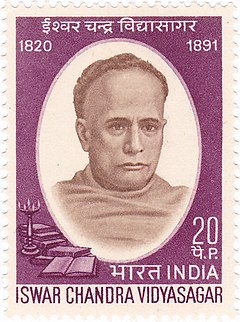
Today on his 200th birth anniversary, I thought of writing a post about Ishwar Chandra Vidyasagar, the ocean of knowledge, the man who studied under street lights.
Ishwar Chandra Vidyasagar :
(26-09-1820 to 29-07-1891)
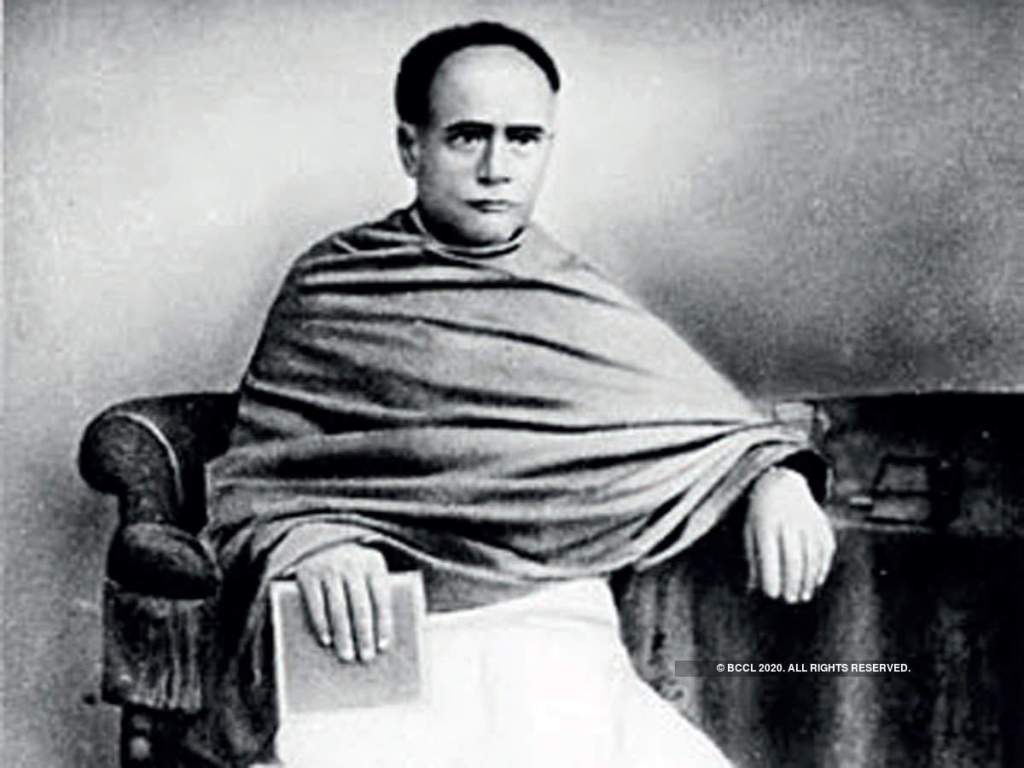
A prominent figure of Indian history and one of the greatest social reformers of his time. Vidyasagar’s original name was Ishwar Chandra Bandyopadhyay (or Ishshor Chondro Bondopaddhae as it’s pronounced in Bengali).
He received the title “Vidyasagar” from Sanskrit College, Calcutta (from where he graduated) due to his excellent performance. The word ‘Vidyasagar‘ in sanskrit literally translates to ‘Ocean of Knowledge’; that he was.
The man who studied under street light:
Yes, he used to study under a street light. Such was Vidyasagar’s quest for knowledge. When he couldn’t afford gas lamp at home it didn’t stop him from studying or acquiring knowledge. And not to mention he exceled in his studies. He was not more than 21 years of age, when in 1841, he joined Fort William College of Kolkata (then Calcutta) as head of the Sanskrit department. Even today this inspiring habit of his is remembered and parents
in Indian Bengali families till day give Vidyasagar’s example to their children.
Vidyasagar is mainly remembered for his reforms in-
1. Education field 2. Widow remarriage
Widow Remarriage:
It was due his efforts that the Hindu Widows’ Remarriage Act, 1856 was passed. For someone born in a orthodox Bengali Hindu Brahmin family in early 19th century,
one can just imagine how much ahead of time he was to not only think but actually work hard by going against the society to bring that change (widow remarriage) in society of that time. He fought virtually alone against the might of the then orthodox Hindu society in which the caste system was prevalent. If I am not wrong after Raja Ram Mohan Roy he was among the earliest voice in India for women empowerment (as we term it today; though I do not agree completely with the phrase).
Contribution in Education sector:
Education of women:
Vidyasagar continuously championed the upliftment of the status of women in India and education was of foremost importance due obvious reasons that he understood clearly. And he voiced and fought for that.
Mass Education:
At that time education was a luxury that only the higher class(higher caste) or the rich could afford. Vidyasagar explicitly advocated for extending education to lower classes, the common people irrespective of their caste, religion and gender. He allowed people of lower caste in his college.
Contribution in Bengali literature:
He made efforts to modernize bengali prose. Simplified the Bengali alphabets and made it reach to the mass. Ishwar Chandra Vidyasagar is considered as the “father of Bengali prose”.
He also wrote many nursery rhymes, small poems for kids.
In recognition of his scholarship and cultural work the government designated Vidyasagar a Companion of the Indian Empire (CIE) in 1877.
-wikipedia
Conclusion:
Rectitude and courage were the hallmarks of Vidyasagar’s character, and he was certainly ahead of his time. He was one of the greatest educationist and social reformer India has seen who voiced for the common people, the backward castes. A person who truly believed in gender equality and was among the very early reformers who worked for women empowerment in India. He is an inspiration to the students, educationist, social workers and to whole society for the matter.
The Indian society would always be grateful to him. Here, this post is my tribute to him and an effort to tell the world about him and his works for my nation.
Hope you liked the post. Hit the like button to encourage me to write more.
Wish you all a nice weekend. 🙂
Connect with me on social media-
facebook instagram linkedIn twitter
 Wave of Thoughts